In recent years, living in the United States has presented challenges to how we relate to one another and with the world around us. Technology is giving us more and faster ways to connect while at the same time decreasing our face-to-face interactions and relationships. The COVID pandemic expanded the ways that we gather with increased use of online video conferencing and streaming of events. Although we have adapted to these and other changing circumstances, there can be a sense of loss on both a personal and a communal level.
This loss can be felt in all aspects of our lives, and our churches are no exception. However, the challenge to live faithfully in changing times is nothing new for Christians. In the United States these changes might be felt in decreased attendance in our worship services, the tightening of financial resources, or the inability to rely on volunteers who have conflicting demands on their time and responsibilities. One challenge that we do not have to face is how to live faithfully and maintain our ministries in the midst of war or armed conflicts.
According to the Geneva Academy, the unfortunate reality is that more than 110 armed conflicts are presently occurring worldwide, from the Middle East and North Africa (45), to Central Africa (35), Asia (21), Europe (7), and Latin America (6). Some are directly between countries; others are caused by non-state actors and foreign interventions by Western powers, while many involve armed groups fighting against government forces or against each other.
While there is deep concern for anyone living in the midst of crisis and despair, one area particularly close to the hearts of many Christians worldwide is how living and ministering in the Holy Land has been affected by war and hostilities in Israel and Palestine. For those Episcopalians who have made a pilgrimage to the Land of the Holy One — and I have personally been blessed to have made ten trips — what comes to mind is how the people are faring in the Episcopal Diocese of Jerusalem, which encompasses not just Jerusalem but has parishes in Israel, Palestine, Jordan, Lebanon, and Syria.
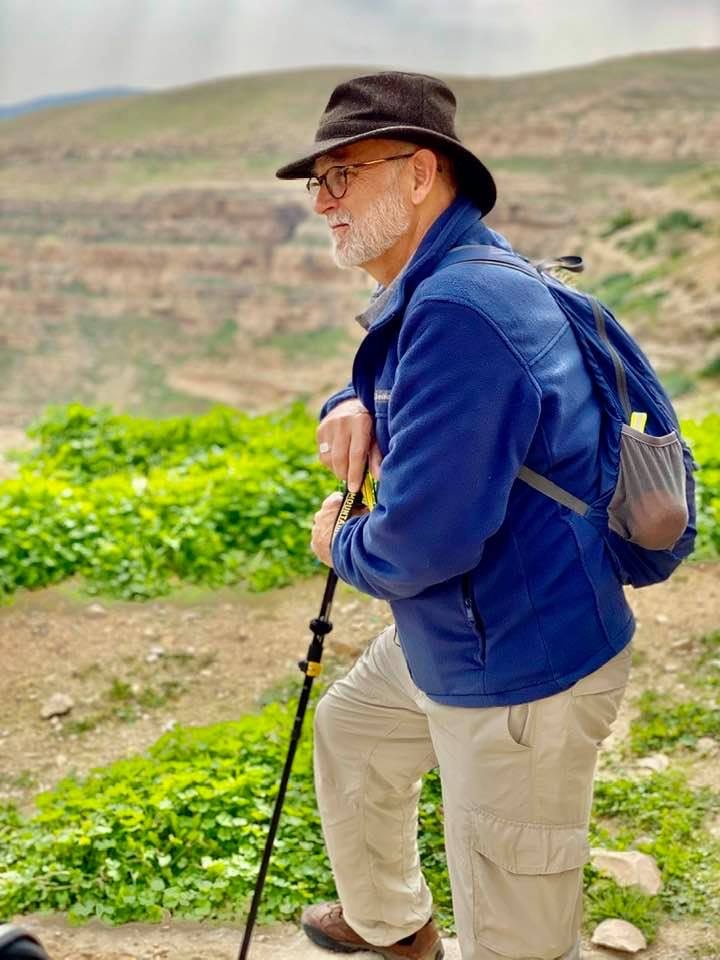
Judean hillside,
while serving as the chaplain on a ‘Footsteps of Jesus’ pilgrimage in the Holy Land
Photo: Nancy Brockway
To make a pilgrimage to the Holy Land, or as they say to walk in the footsteps of Jesus, is to encounter not only the land but the people who live there, many of whom are deeply rooted in its history. As the website for the Diocese of Jerusalem states regarding its congregations, “The indigenous families who make up most of these parishes are the descendants of the Arab Christians first baptized in Jerusalem on Pentecost (Acts 2:11). As the remnant of the ancient Christian presence, they are the ‘Living Stones’ of the Holy Land (1 Peter 2:5). Together with the expatriate Anglicans of the diocese, they seek to uphold the work and teachings of Christ in the very places where he ministered in his earthly life.”
The Diocese of Jerusalem
The reality for Palestinians of any religion is unpredictability of what the next day will bring — whether it’s restrictions on travel, on employment, or access to resources placed on them by the Israeli government. The Most Reverend Hosam E. Naoum, bishop of the Episcopal Diocese of Jerusalem and Archbishop over the entire Province of Jerusalem and the Middle East, knows what it means to meet the everyday challenges of being a Christian in the everchanging world of Israel/Palestine. A Palestinian himself, he was born in Haifa in 1974 and raised in Shefa’amr, an Arab city in Galilee. He was ordained to the priesthood after studying at schools in South Africa, and he later earned his Master of Theology and Doctor of Ministry degrees from the Virginia Theological Seminary in the United States. He first served at two parishes in the Palestinian West Bank (Nablus and Zababdeh), and then as dean of St. George’s Cathedral in Jerusalem before being chosen to become the bishop of the diocese in 2020.
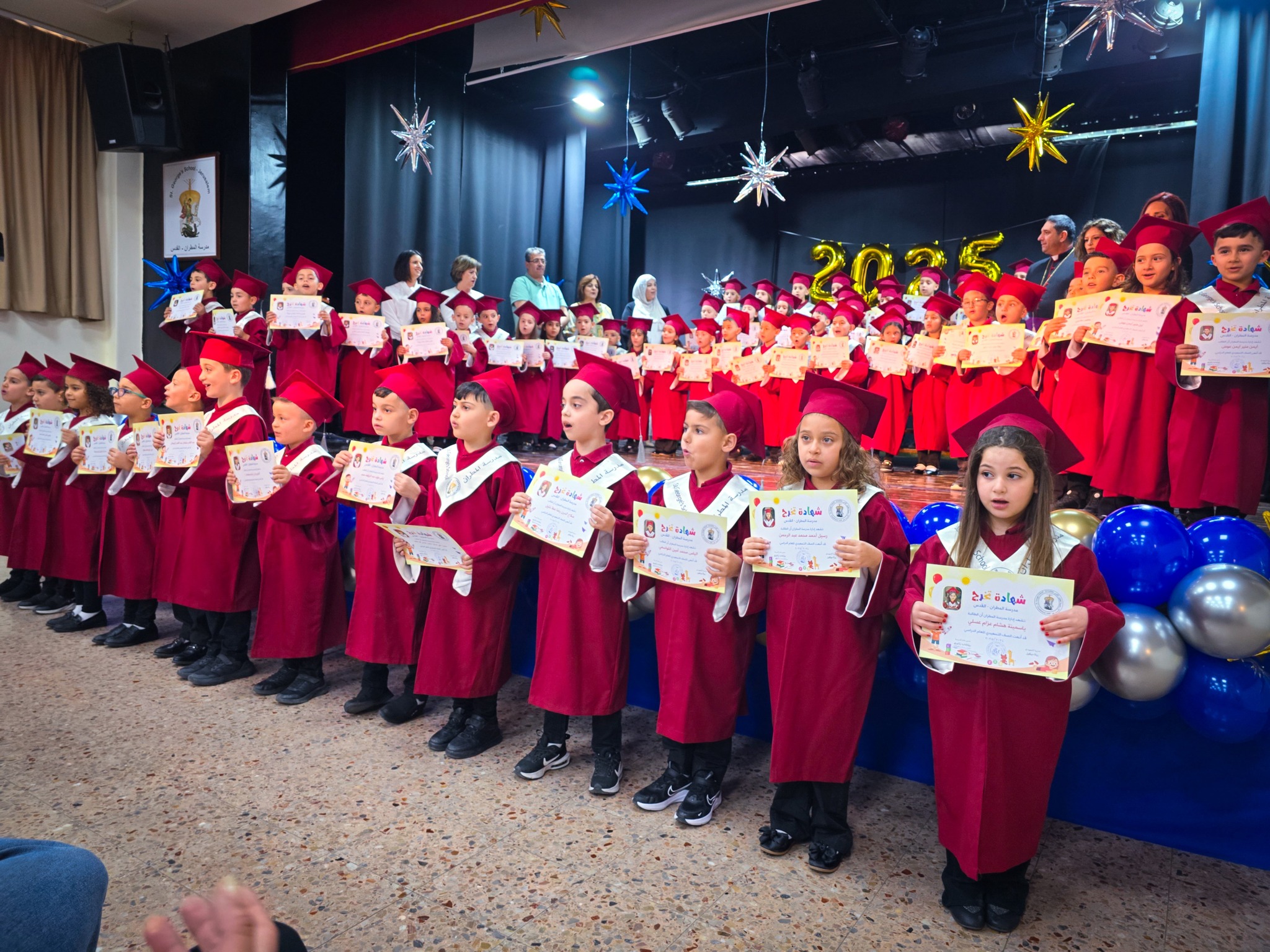
Episcopal Diocese of Jerusalem
Photo: Don Binder
His responsibilities are diverse and challenging. In addition to 28 congregations spread over five countries and territories, Archbishop Hosam oversees more than 30 diocesan institutions including schools, hospitals, clinics, rehabilitation and vocational training centers, and guesthouses. In an address to the General Synod of the Church of England on July 15, 2025, he stated,
“These are our arms of ministry in which we show our faith in God through action and ministry, to reach out to those who are disadvantaged, healing the sick and teaching reconciliation with peace and justice, welcoming pilgrims and offering hope; these are at the heart of our ministry in the Diocese of Jerusalem even during difficult times and devastations.”
Palestinian Christians in the Holy Land
Life for all Christians in the Holy Land has been challenging for years as their percentage of the population has steadily dropped. When the modern state of Israel was created in 1948, ten percent of the population identified as Christian; in 2025 it’s down to less than two percent. Since the start of the hostilities that began in October 2023 with the horrendous attack by Hamas militants on Israeli civilian and military areas, the day-to-day life for all inhabitants of Israel, Gaza, and the West Bank has been unpredictable and filled with despair, destruction, and death. As the archbishop’s chaplain, the Rev. Canon Don Binder, observed regarding the Palestinian Christians, “the present circumstances are a deepening of the lives they’ve been living for years.”
During my travels I have had the opportunity to personally listen to the stories of Palestinians, both Christian and Muslim, and how their lives or the lives of their families have changed since 1948. The wife of an Episcopal priest serving in Galilee once told me that her family traced its history in Palestine back at least 15 generations, only
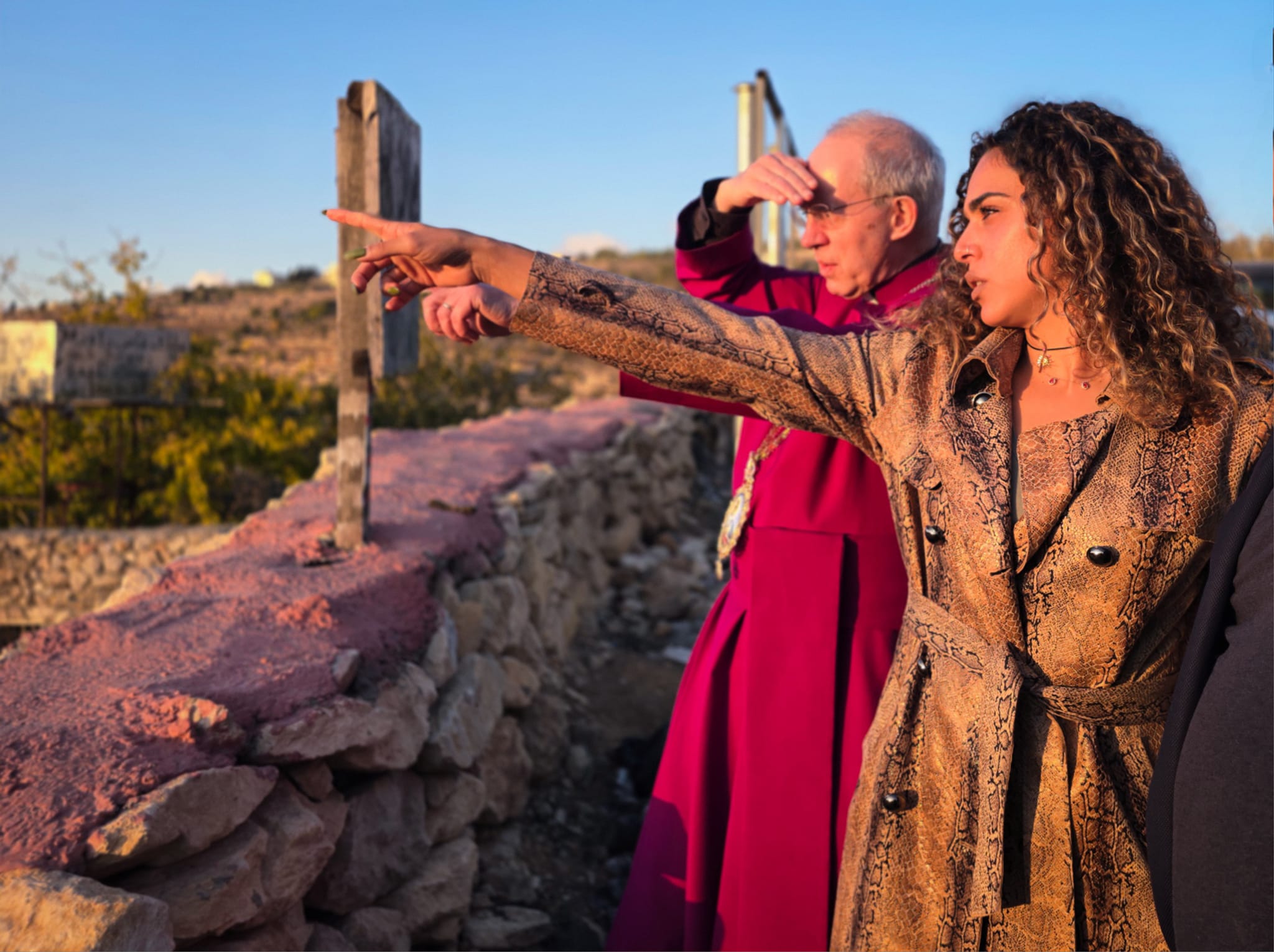
on the opposite side of the highway
Photo: Don Binder
to lose their ancestral land. Her father had also been an Episcopal priest, and while heartbroken by being displaced he never let anger diminish his faith in God. In 2009, during my first pilgrimage to the Holy Land, a Palestinian guide traveling with our group pointed to abandoned homes on a hillside outside of Jerusalem, telling us that is where his family lived until 1967 when they were forced to move and never allowed to return.
And, my favorite shopkeeper in East Jerusalem shared how he now lives in a tiny apartment in the city as the checkpoints set up by Israeli authorities prevent him from returning to what he described as his larger home in the West Bank.
Diocesan Hospitals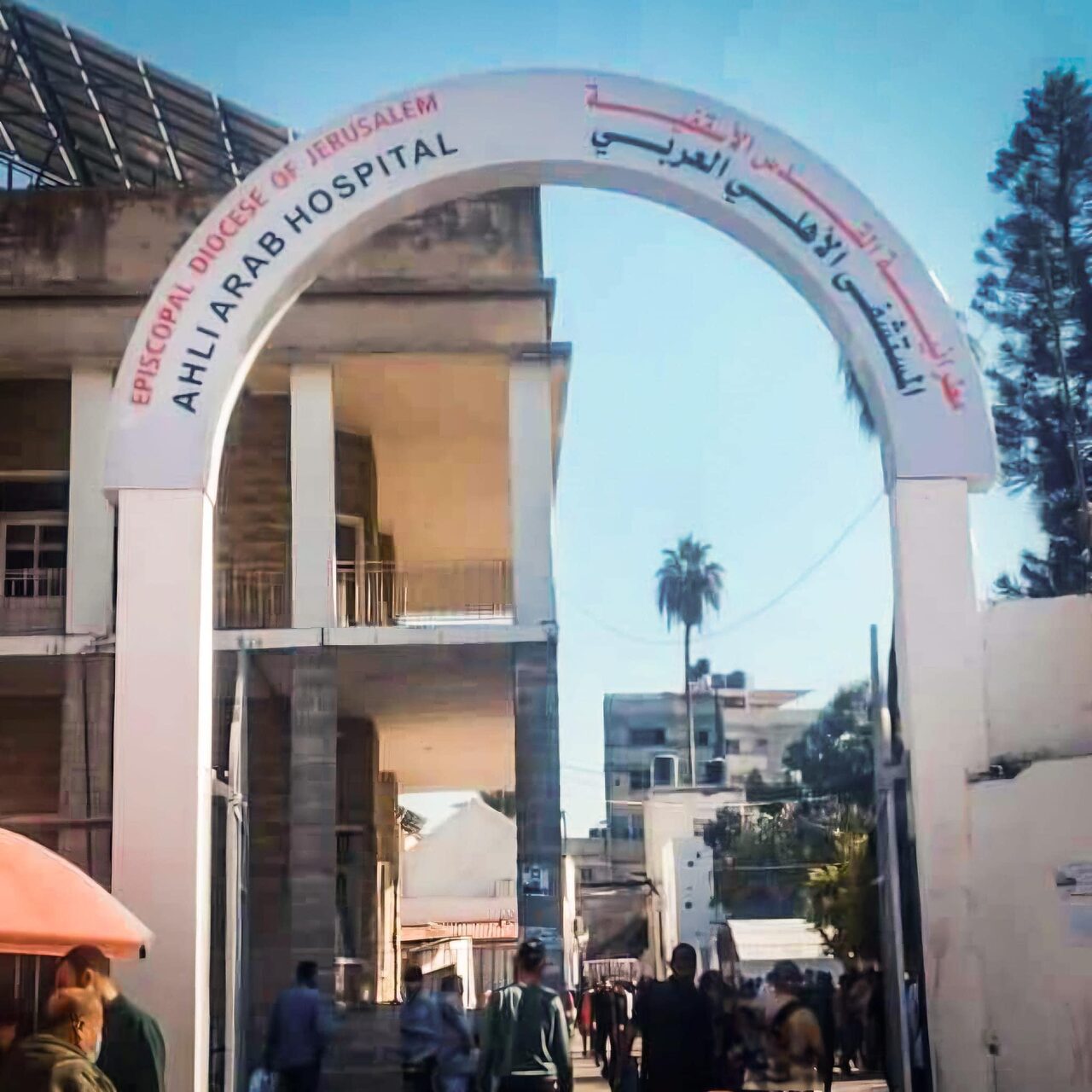 As has been well documented by the media around the world, the al-Ahli Arab Hospital in Gaza (which is operated by the Episcopal Diocese of Jerusalem and open to people of all faiths), has been bombed at least eight times by the Israeli Defense Forces (IDF) in its stated pursuit of Hamas terrorists. Dozens of medical staff, patients, and people seeking refuge from the violence have been killed or wounded in these
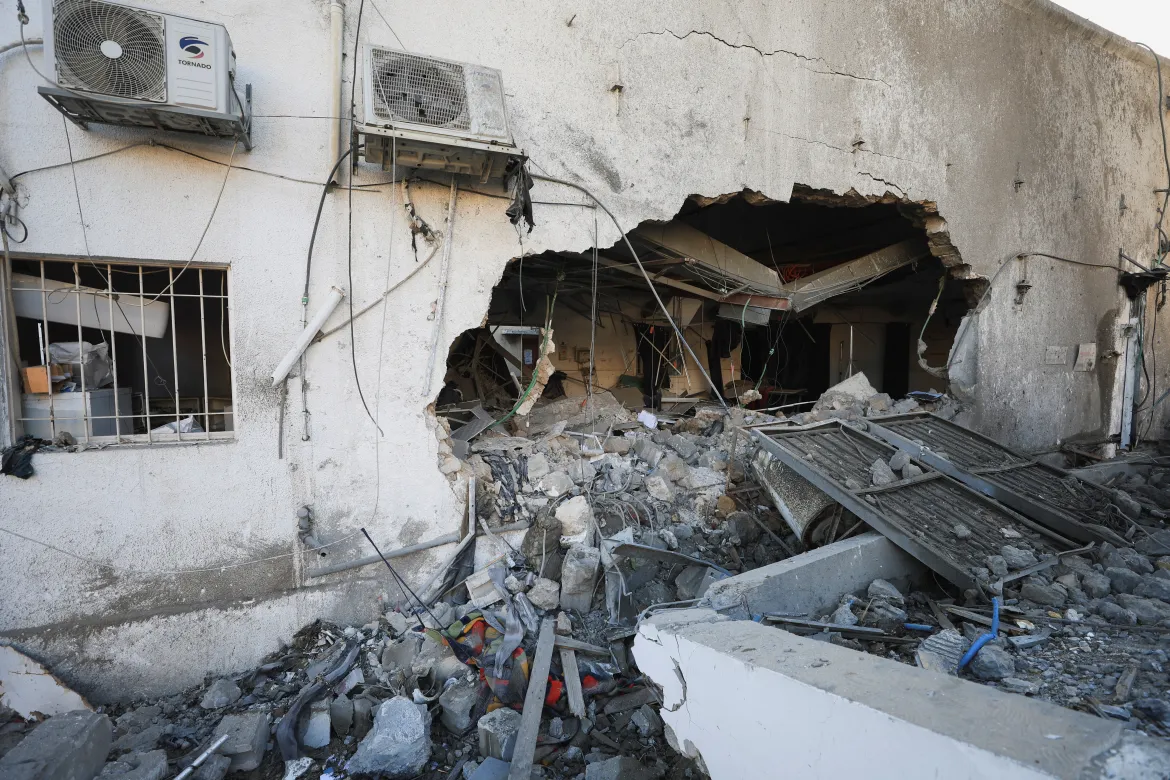
hit al-Ahli Arab Hospital in Gaza City
Photo: Dawoud Abu Alkas/Reuters
attacks. Some of the hospital staff have been taken as prisoners without being charged in any wrongdoing, and numerous buildings have been destroyed. Even in the face of such horrors, the hospital continues to operate with whatever resources it can manage, including moving its emergency room into tents.
The other hospital of the diocese, St. Luke’s in the West Bank, has not suffered such carnage; however, it has lost significant revenue and the ability to receive patients as the IDF has increased the use of checkpoints and lockdowns restricting the movement of Palestinians from their villages. In the midst of so much despair, it was heartening to read an article in Haaretz, an Israeli newspaper, on The Road to Recovery, an NGO “whose Israeli volunteers drive Palestinian patients from the West Bank (and, before the war, from Gaza) to hospitals in Israel and back.” The organization’s CEO, Yael Noy, was quoted as saying, “Some days we’re doing 80 rides” and “demand from the West Bank has skyrocketed.”
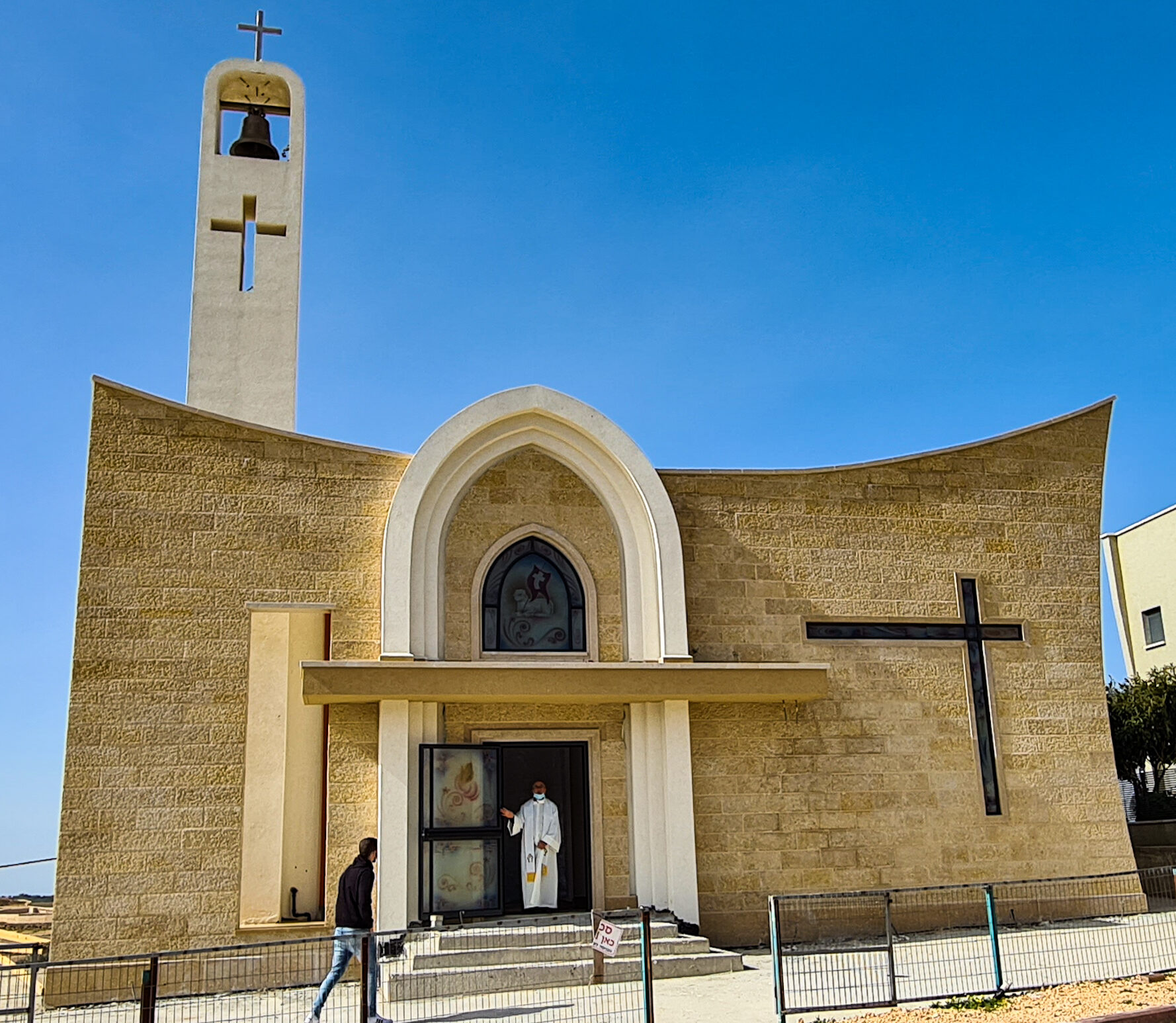
Photo: Episcopal Diocese of Jerusalem
Diocesan Parishes
While the concern for the hospitals and other institutions is widely shared throughout the diocese, some of the parishes have also been directly affected by the uncertainty of where and when hostilities will occur since the beginning of the war. Parishioners and clergy of Christ the King, Tarshiha, located in the north of Israel, needed to seek shelter in October 2023 as Hezbollah, a political and paramilitary group operating out of Lebanon, launched rockets and artillery into northern Israel. The horror of this violence was felt by civilians on both sides of the conflict. Archdeacon Imad Zoorob, rector of All Saints’ Episcopal Church in Beirut, helplessly watched the news as his hometown in southern Lebanon was largely destroyed in the bombardment that Israel conducted in response to the missiles fired into its territory.
Further south in Haifa, a city in Israel on the Mediterranean coast, the people of St. John’s & St. Luke’s had to shelter in June 2025 as Iran fired missiles on the area. Although that attack did not affect any of the parishes in the Palestinian West Bank, the Rev. Jameel Maher Khader, rector of St. Philip’s Church, Nablus, has been restricted numerous times to travel about the area as the city has been locked down by Israeli forces. And, as recently as September 7, 2025, the parishioners at St. Andrew’s in Ramallah, also in the West Bank, recounted stories of hardship including incidents of violence from extremist Israeli settlers, being held at checkpoints for hours without cause, and loss of employment when USAID was abolished. In addition, since the start of the war the Rev. Fadi Diab, rector of the parish, has been denied entry into Jerusalem to visit with Archbishop Hosam.
And yet, the determination of Christians to continue their witness and ministry in the name of Jesus continues unabated even in the face of growing hostility and challenges. As Archbishop Hosam forcefully shared with the General Synod of the Church of England, “The major question that Christians in the Holy Land are struggling to address is what it means to be a church in the time of war. We are battered and bruised, but we are not defeated or crushed.”
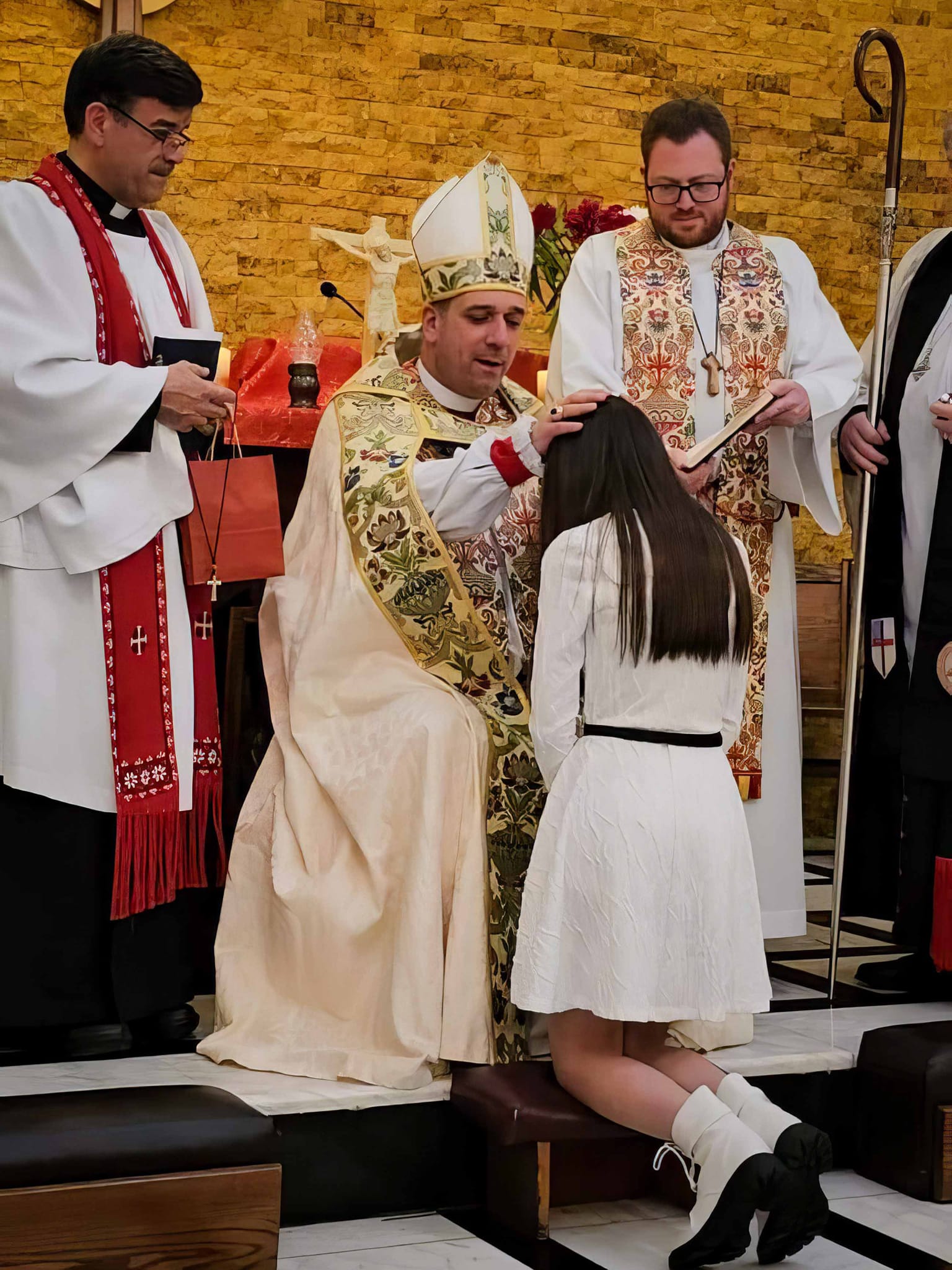
young person at
Christ the King Church in Tarshiha
Photo: Don Binder
Hosam’s calm but determined commitment to the people of his diocese is to faithfully endure by focusing on what he terms a ministry of presence and resilience. A recent sign of this resilience occurred at one of the churches mentioned earlier — Christ the King Church, Tarshiha — which had been terrorized in 2023 by the fighting in Upper Galilee. The church was opened only four years ago as the Diocese of Jerusalem’s first new church plant since 1948 when several of its churches were forcibly closed and their congregations driven out. With assistance from the German Evangelical (Lutheran) Church, and under the leadership of the Rev. Hatim Jiryis, rector of Christ the King, the congregation overcame obstacles to slowly grow and thrive. The resulting good news is that on August 24, 2025, Archbishop Hosam was able to officiate at the very first confirmation service held at the parish, laying his hands upon ten young people and offering prayers for the outpouring of the Holy Spirit in their lives.
In Solidarity
In conversations with several expats serving in the Diocese of Jerusalem, they expressed how grateful the leadership and people of the diocese have been for the prayers and much needed monetary support from Christians in the United States and other parts of the world. Both are truly expressions of solidarity with a church that daily faces challenges that far exceed whatever we in the Episcopal Church deal with on a regular basis. The question for us, however, is what more can be done? Is there something we need to hear and heed from the voices in the Holy Land? Perhaps Archbishop Hosam’s words can help us discern where we stand with a people forced to live amid chaos and despair:
“I realize that we live and embody the Gospel, and we are not politicians. However, we need to speak out in the face of injustices and be prophetic for the sake of all people and our calling as Christians. But where the church is wounded and constrained, we need the wider body of Christ to help us to be the church in brutal and damaging times. We are . . . truly the church of Christ when we are a Church united in Christ’s mission.”
Certainly, we have our own concerns close to home. As members of our parishes and of the Episcopal Church in Delaware, we would be negligent if we failed to faithfully tend to both the challenges and the joys we encounter as followers of Jesus Christ. When confronted with the realization of the circumstances facing others outside of our immediate communities, in this case the Diocese of Jerusalem, our first inclination is to pray.
But to quote an old African proverb, one often repeated by the Civil Rights champion John Lewis, “When you pray, move your feet.” Prayer alone is merely words if it is not the precursor to action. Repentance, reconciliation, advocating for justice, providing for those in need, speaking up for the powerless, or any other Christlike response that touches the heart of our faith — these are how we “move our feet” in response to prayer.
The people of the Holy Land — Christians, Muslims, and Jews — are waiting for us to step up and to step out in faith. May we never become bystanders to the godly call to “dwell together in unity” (Psalm 133:1). We need only listen, and pray how we might individually, or collectively as Church, make an actual difference in the lives and hopes of those whose only desire is to live in peace.
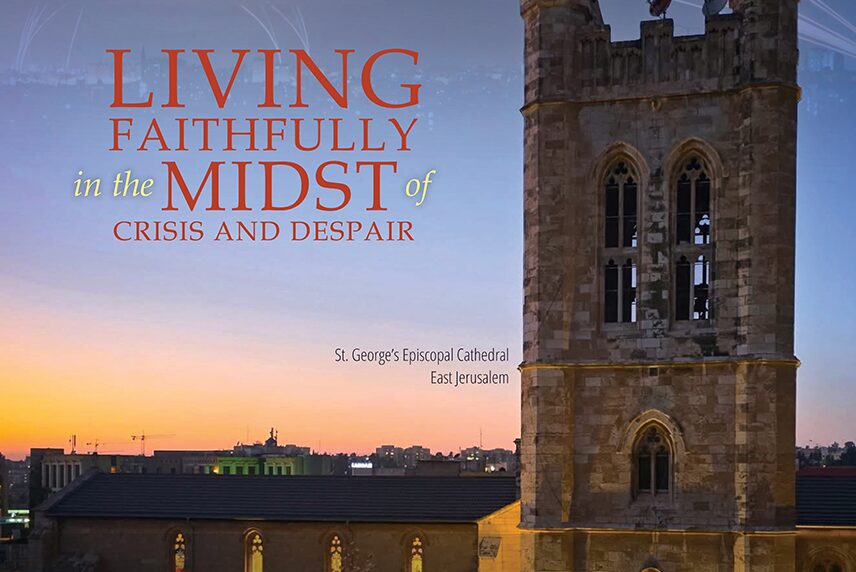
Living
Faithfully
in the midst
of Crisis and Despair
Living
the Questions
in the
Holy Wild
Building
Community
One Project
at a Time
Looking
Back
with
Joy
Bishop's
Message
Riding the
Narrow Road