When I was ordained to the transitional deaconate in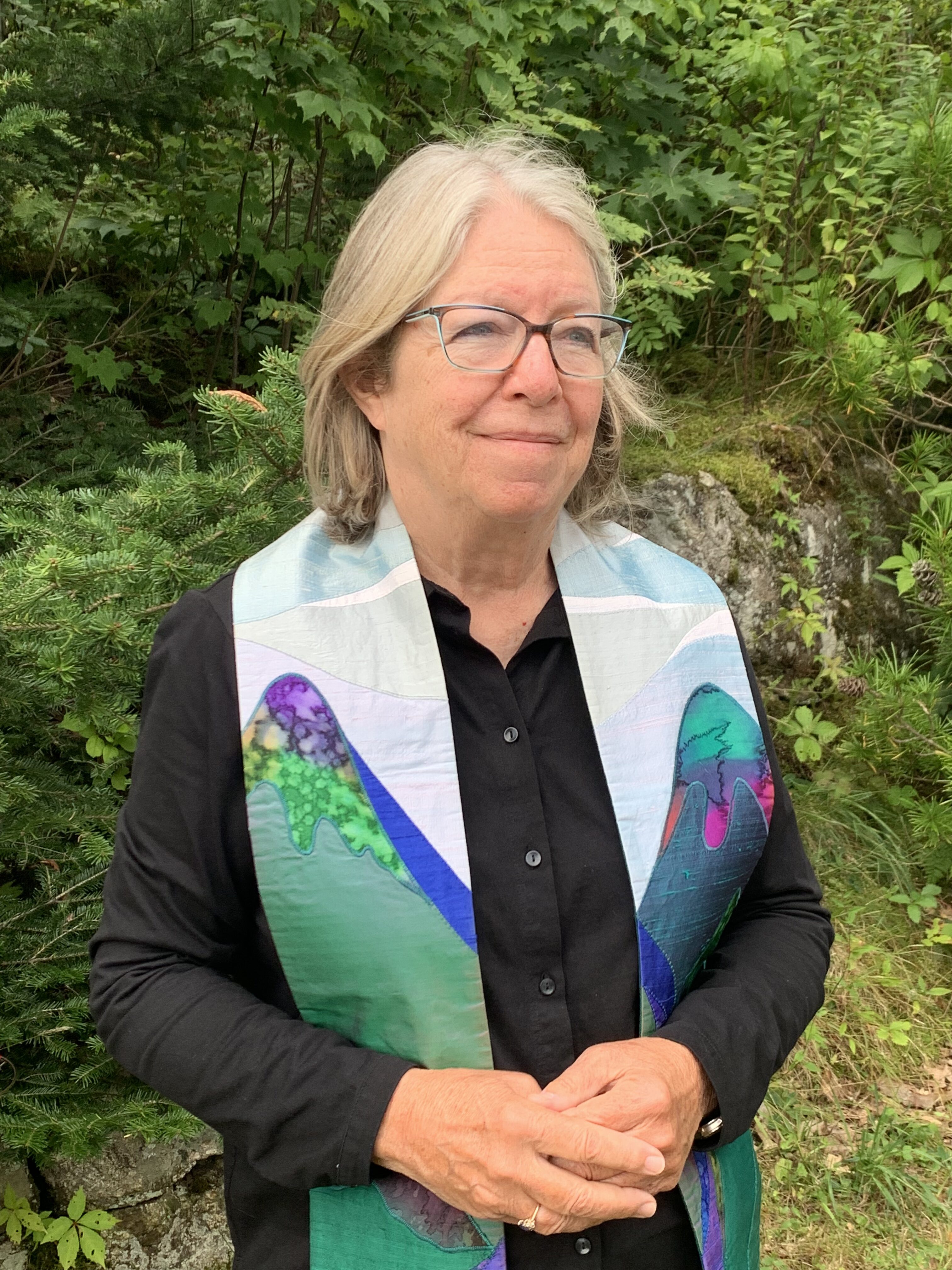 2007, the parish where I was serving at the time, St. Bartholomew’s in Yarmouth, Maine, had a stole made for me. Pieced together in gorgeous shades of watered silk, the stoledepicts Maine’s natural environment — green fields, rocks, ocean, mountain peaks, fish. On the back, at the point, is a dragonfly.
Many years later, in 2025, I received another stole, this time at Ghost Ranch, New Mexico, as 50 or so of us were ordained as Wild Guides. Our Certificate of Wild Ordination states that we have “demonstrated the sacred practice of kindred conversation” and been ordained by the Holy Wild. That stole depicts a coyote (the name of our cohort), a moon, and a large tree silkscreened on diaphanous fabric.
The priest’s stole, “the yoke of Christ,” is a symbol of humble service and priestly authority. These two stoles are reminders to me of my particular calling and responsibility: to use my voice and my authority as a priest in service to the people and to the rest of the natural world.
Prior to my ordination, I had the opportunity to work on behalf of the environment as an environmental regulator, and, after I was ordained to the priesthood, to serve my priestly vocation. But bringing the two together — priest and environmentalist — has seldom been natural, easy, or self-evident. In fact, often it has not been welcomed by others, either in the church or in the secular world of environmentalists.
Most of the time, I can only do so bi-vocationally and in piecemeal fashion, such as by serving on the board of an environmental organization (“psst — please don’t talk about Jesus,” (as I hear the cock crow)) or preaching about the natural world during “creation season,” if a church has one. It has been an awkward stumbling forward at best.
But I am prayerfully, deeply, hopeful that this is about to change for The Episcopal Church. The most recent General Convention in 2024 passed Resolution B002 to “urge and equip bishops and dioceses to form strategic Eco-Region Creation Networks of incarnational impact for the healing of the world God loves…”
It calls upon “bishops and dioceses [to] work together to form regional networks, to be called ‘Eco-Region Creation Networks,’ based on shared ecosystems or watersheds. These Eco-Region Creation Networks link people, projects, and properties dedicated to nature-based solutions to slow climate change through preserving and restoring plant communities appropriate to their bioregion; modeling transformative agriculture and food systems; and tackling issues of water quality and supply…”
Under the leadership of the bishops of Washington, Delaware, Maryland, and Virginia, we submitted a proposal to the Presiding Bishop for and had approved the Chesapeake Watershed1, including the Delaware Bay. As of June 2026, the Chesapeake Watershed is one of 12 eco-region networks around the Church.
The first thing we are doing is to organize ourselves for our collective work. The Rev. Pete Nunnally, whom, you may remember, recently served as the interim rector at St. David’s in Wilmington, is the Eco-Region Fellow for the Chesapeake Watershed, and as such convenes the leadership team consisting of two representatives from each of the participating dioceses.
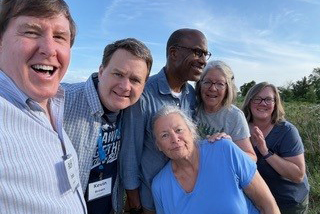
Each diocese has put together a leadership team. 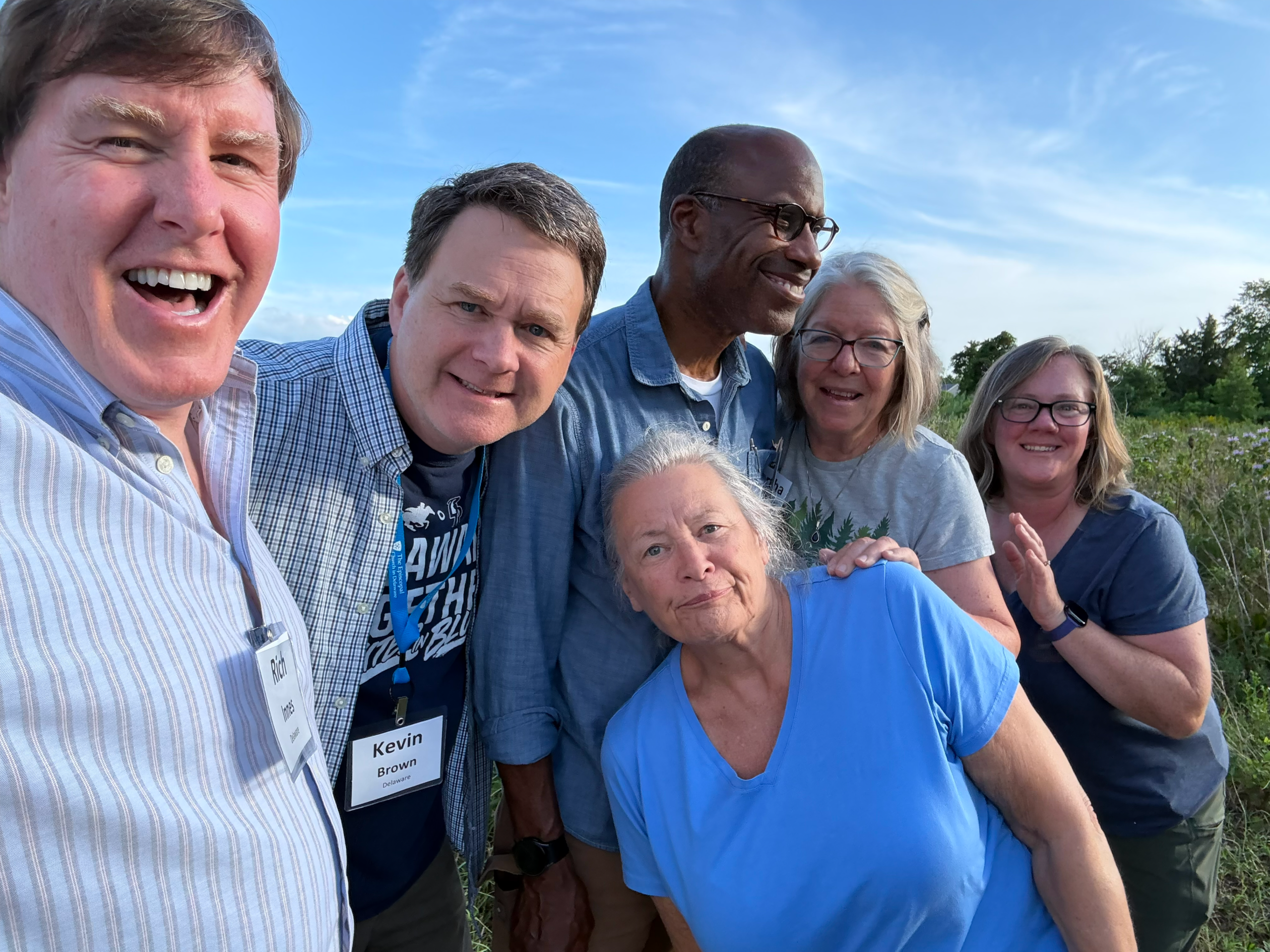 Delaware’s leadership team is: Bishop Kevin S. Brown; Mimi Dupont, St. Martha’s, Bethany Beach; the Rev. Martha Kirkpatrick, retired; Rich Innes, St. Peter’s, Lewes; Steve Jones, Saints Andrew and Matthew, Wilmington; and Kristen Thompson, Christ Church, Dover.
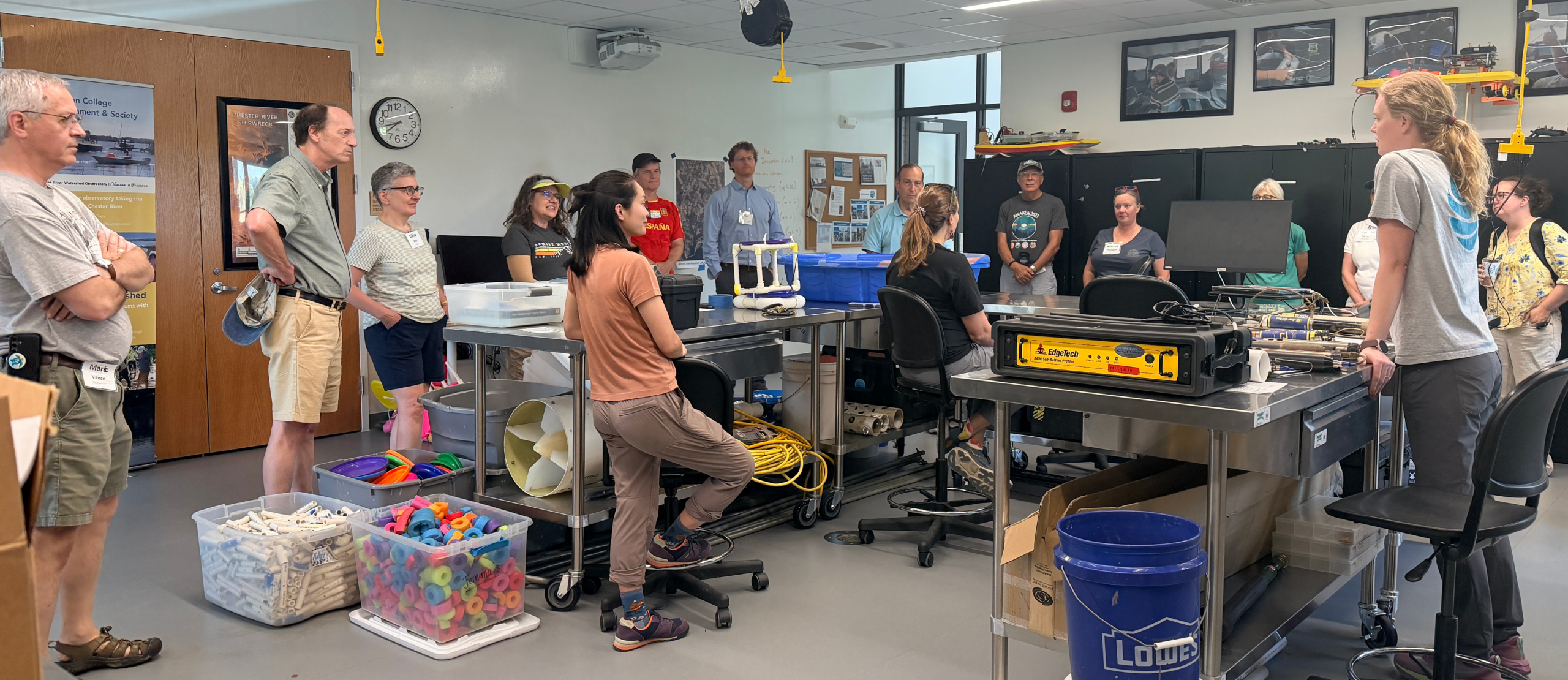
The Chesapeake Watershed Eco-Region Network had our first gathering in July at Washington College in Chestertown, Maryland, on the Chester River. We met at the Center for Environment and Society (CES) in their platinum LEED2-certified building. We got a “Chesapeake Bay Natural History Crash Course”; toured the Watershed Innovation Lab; heard a presentation on Indigenous communities of the Chesapeake Bay by Tom Bradshaw, a member of the Nause-Waiwash Band of Indians; and heard from several non-governmental organizations whose mission is Chesapeake watershed restoration and regeneration.
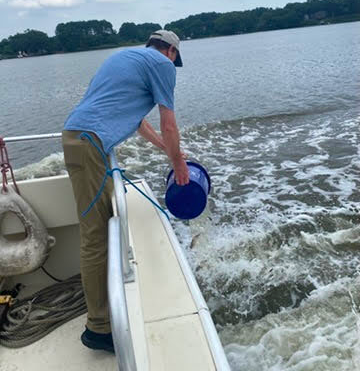
We got out in a boat for a group trawling experience on the CES research vessel, the Callinectes; we dug around in the dirt and planted things. We got to know each other, and we brainstormed our priorities. Pete led us in Water and Wilderness Church Eucharist.
In the afternoon of the second day, we split off into diocesan teams. As the Delaware team met on the porch, with goldfinches and pollinators dancing in front of us, we imagined together what our work for and with our natural environment might look like.
The bishop suggested three categories. First, to assess our diocesan assets (for example, what organizations in Delaware might we partner with that are doing this work?) and what are our needs for this work? Where do we need more information? The second category is the inner work of spiritual groundedness, such as water and wilderness church, and spiritual contemplative practices to deepen our relationship to the natural world. The third category is to look at potential actions diocesan-wide, as well as to inspire and empower this work at the parish level.
Thursday morning, our last day at the gathering, Mimi Dupont and I decided we would ignore the weather predictions and the ominous-looking clouds and drive to the CES to see the sunrise. When we got there, Kristen Thompson had beaten us to it and was sitting on a rocking chair facing across the Chester River to the eastern sky. So we three sat in silence and waited.
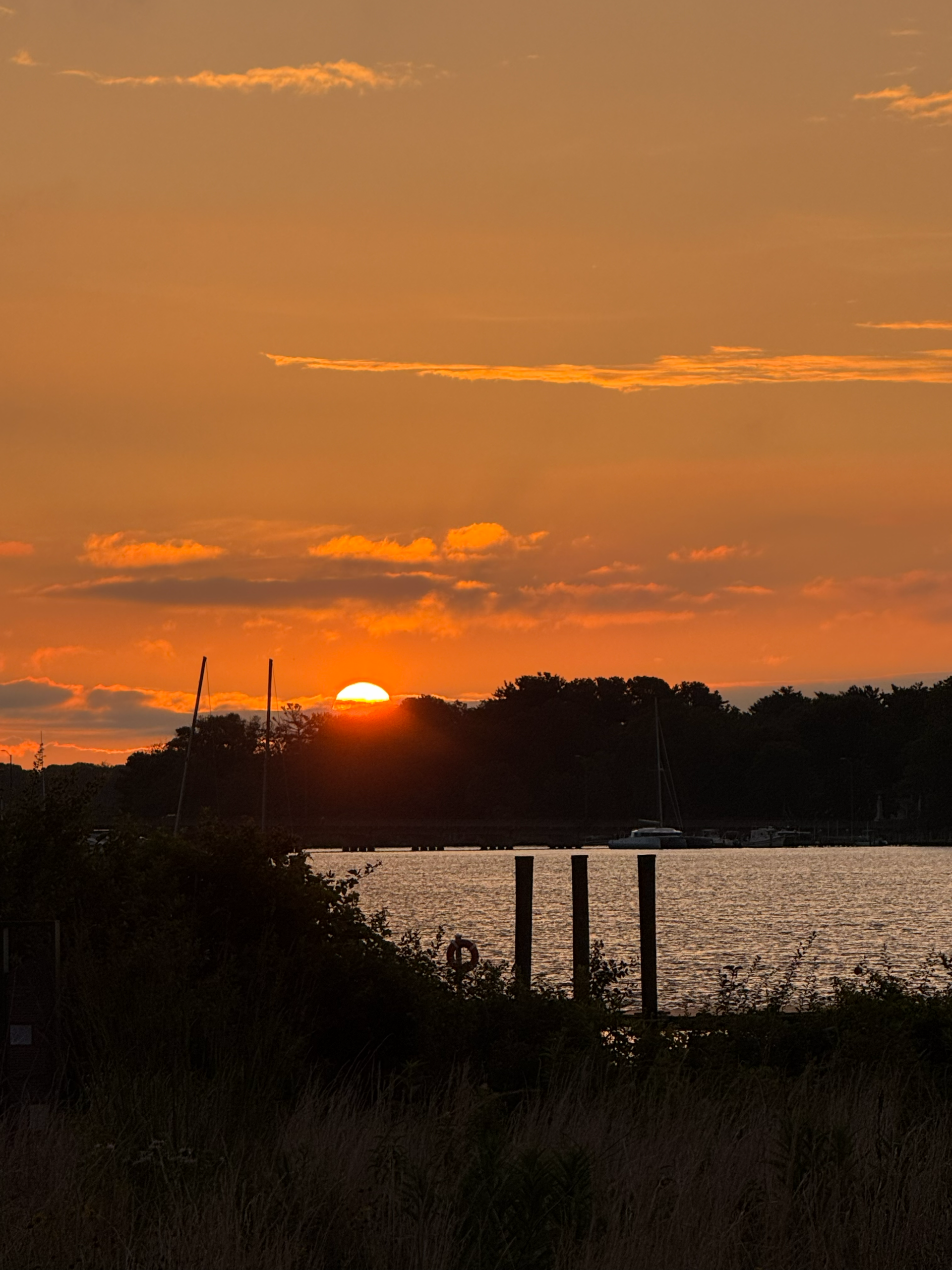
Suddenly, the sun broke through the clouds in great rays that looked like the heavens declaring the glory of God. As that happened, a thought broke into my psyche: What if what we are truly about here is not only to add our support to the restoration of the Chesapeake watershed, but to plant seeds for the renewal of the Church? What if all of our efforts across the many eco-region networks, turning our hearts and minds to the ecology of this earth, will shift something profound and life-giving in the Church itself?
This is about more than doing. It must necessarily involve being. There is inner work to be done, as well as outer work. Profound questions can and will present themselves: Who am I in relation to the more-than-human world? Is the rest of the natural world animate? That is not what most of us were taught, but more and more evidence suggests that it is. How might I come to deeply understand myself as radically and deeply interconnected with all of life? Our evolution is calling.
The resolution to develop eco-region networks states what we all know: that God loves this whole world. Every particle of it. That this planet is in peril is obvious to anyone who is paying attention. The calling to serve Christ and all creation is not just mine, or a few of ours. It is all of ours.
We, your Delaware eco-region team, are excited and inspired to do this work and hope you will join us.

My
Calling
To Lay
Preaching
Planting
Seeds
for the Renewal
of the Church
Operation
West Laurel
Community Action
Grounded in Faith
PEACE
Center
Presbyterian Episcopal
Alliance for Campus Engagement