Yet even now, says the Lord,
return to me with all your heart,
with fasting, with weeping, and with mourning;
rend your hearts and not your clothing.
— Joel 2:12-13
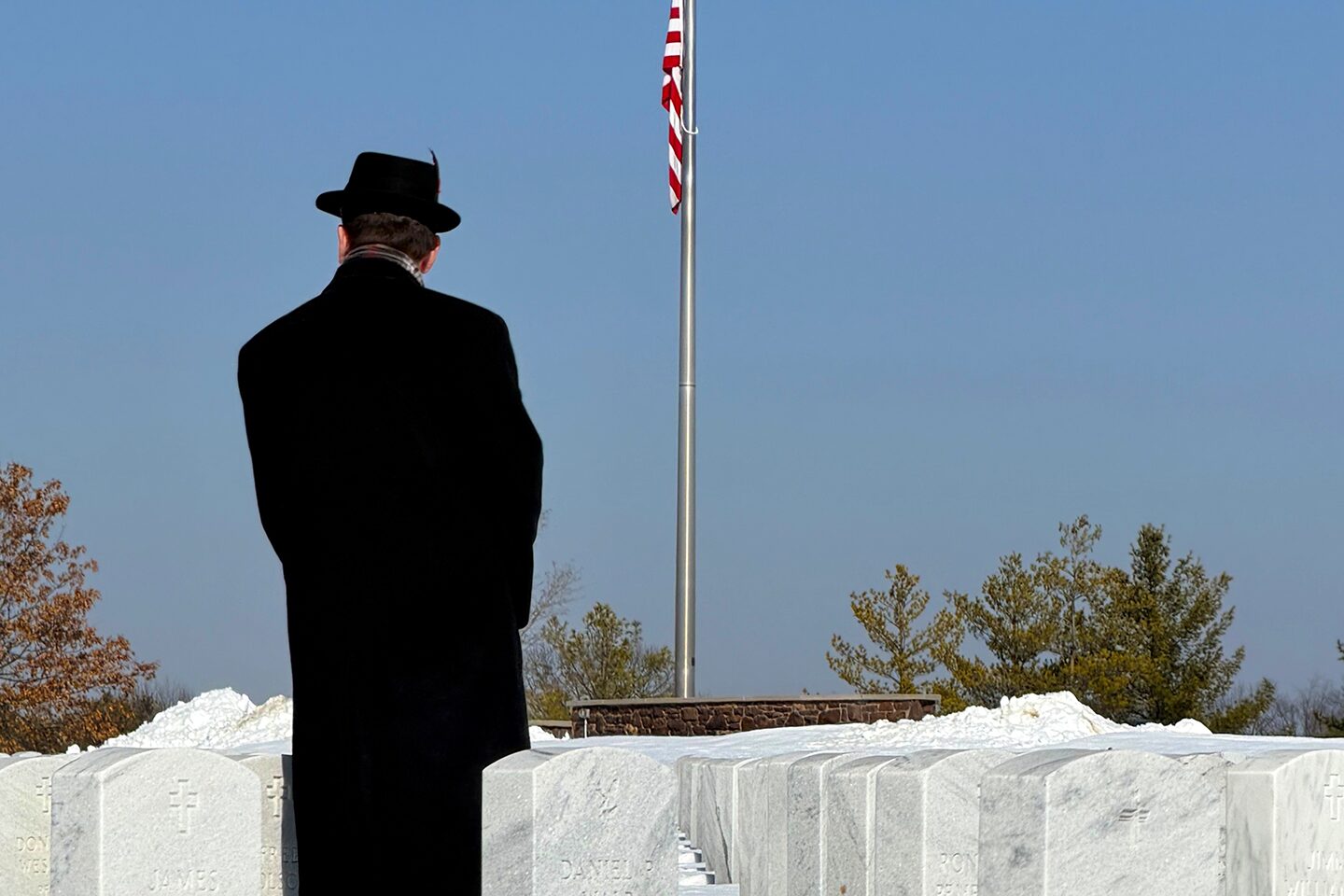
Joel’s admonition, familiar to all Episcopalians during the season of Lent, is no problem for me. In my work as a death care professional for the Department of Defense and as an intern at a funeral home in Wilmington, I live with a seemingly permanent broken heart. My heart is soft and malleable. Tears come to my eyes readily these days. This has not always been the case, and I am deeply grateful for it.
I am deeply grateful because, for one, my mental health is stronger than it has ever been. I am also closer to God than I’ve ever been, because I meet him face to face on a nearly daily basis.
When people hear of my work, they often assume that business must be pretty slow these days, since the U.S. military isn’t currently engaged in active conflict anywhere in the world. Combat, however, has not been the leading cause of death in the military since we began keeping records in 1980. From 1980 until 2014, the leading cause was accidents — both training accidents and, more commonly, vehicle and motorcycle accidents. In 2014, the military crossed a dangerous Rubicon from which we have not been able to recover. That year, suicides — or, as we call them, “self-inflicted deaths” — became the leading cause of death in the military, and they have remained so ever since.
Suicides in the military have increased every year since 1980, and we now have more than 44% more than we did then. Today, a servicemember is nine times more likely to die by suicide than in combat. A servicemember is 17.86 times more likely to die by suicide than a civilian. (Approximately 0.14 Americans out of every thousand die by suicide each year, but in the military it is 2.5 per thousand.)
As someone who does this work every day, however, I can tell you: the statistics don’t matter. They are just numbers. When I am sitting with a family who has lost a son, or brother, or father just hours before — over 90% of military suicides are male — they do not care to hear about the numbers.
No two situations are alike, because no two families are alike. But there is one common denominator. There is one thing that occurs every single time, without exception.
They always ask why.
And I never have an answer.
After a few years of doing this work, I have come to the conclusion that the reason there is no satisfactory answer is because it is the wrong question.
Perhaps a better question — or at least the only one I have found that provides any comfort at all — is: “Where is God now?” In my experience, asking this question opens a door to exploring our fears. It also provides an opportunity to describe God’s presence in the midst of our pain.
It is a bit of a theological paradox for me — and one that I plan to ask God about directly as soon as I get to the other side — but it has been my experience that God’s presence is somehow most palpable in situations of profound grief, indescribable loss, and unspeakable pain. I sometimes find myself almost feeling sorry for people who have never had the opportunity to sit with a family in one of these sacred spaces, because in those rooms you experience God in a way I have never experienced anywhere else. God is always there. You can feel God’s presence in a physical, almost tactile way.
Throughout the Gospels, a few themes develop about who Jesus is and what he came to do — or perhaps better said, who Jesus is not and what he did not come to do. From the beginning of Christ’s life on this earth to the end, he proves over and over again that he is not the Messiah the world was looking for.
In Christ’s temptations in the wilderness, he was offered the opportunity to solve all the world’s problems. He turned it down.
He was not the Messiah they were looking for. They were looking for someone to reclaim Jerusalem from Rome. They were looking for the glory of their nation. They were looking for economic recovery.
What he offered — what Christ still offers — is compassion. What he offers is hope. What he offers is salvation.
 Where is God now? It is a holy question.
Where is God when we are anxious? Where is God when we are oppressed? Where is God when we are experiencing grief or loss?
I was probably six or seven years old, in Baptist Sunday School, when I learned that the longest verse in the English Bible is Esther 8:9 and the shortest verse in the Bible is John 11:35: “Jesus wept.”
I find meaning in that.
I am aware that the entire concept of verses was not introduced into Scripture until the 16th century, but I also know that those early church fathers could have attached those two words to the preceding verse or the following one. It seems to me that the choice to set them apart and make them stand out as the shortest verse in the Bible was intentional. I believe those two words communicate everything we need to know about Jesus. Christ’s very essence is found in the moment when he wept.
That verse, of course, comes from the passage about Lazarus. Jesus is weeping at the tomb of his friend Lazarus. The curious thing to me has always been: why? Not five minutes later, Jesus was to raise Lazarus, and he had to have known this. So why is he weeping?
I do not believe Jesus is weeping for Lazarus. Jesus is weeping because he saw Lazarus’s friends weeping. He is weeping out of compassion for them — compassion for the human experience of grief and loss. He is weeping tears every bit as salty as our own, and he still does.
Beloved in Delaware, where is God now? Where is God when we are weeping? He is as close to us as he has ever been. He draws closest to us when we are hurting. He is as near to us as the catch in your throat when you are sobbing. And this love-soaked grief of ours is holy to God.
John’s account of Jesus’ own death and resurrection includes a line not found in the other Gospels, and it has always seemed meaningful to me. John writes, “While it was still dark, Mary Magdalene came to the tomb and saw that the stone had been removed.”
“While it was still dark.” Those words quite aptly describe the days and months — and sometimes even years — after a tragedy. It is still dark.
I do not know why, but it seems to me that in God’s economy, his most wondrous work is done while it is still dark. While we are still in despair. While we are still grieving. While we are still sinners. While we are sure that nothing good will ever come. When we are certain our hearts will never know joy again. When we come face to face with death — that is when we are closest to resurrection.

There are facets of life that can only be seen clearly through the prism of grief. In the days and weeks after a tragedy, you will detect this. You might even want to look away, but I encourage you to resist that urge. You are seeing life as it truly is.
Later in that same passage from John, the two angels in the tomb ask Mary, “Woman, why are you weeping?” Then Jesus himself appears and asks her the same question again: “Woman, why are you weeping?”
I was taught to read this passage as an accusation — as an “O ye of little faith” moment. Almost as if Christ were saying, “How dare you be crying? Didn’t I teach you anything?” I was taught to hear this question as Christ and the angels telling Mary that she was overreacting — as if they were rebuking her for her tears and for her grief.
But then I remember that Christ himself wept at the tomb of his friend Lazarus. After experiencing a few losses in my own life, I have come to hear this question not as an accusation but as an invitation. I hear it as an honest question. I hear Christ inviting me — and all of us — to tell him: “Why are you crying? Tell me what it is about this loss that hurts. Tell me what it is about this person that meant so much to you. Tell me how you saw God’s face in this person. Tell me.”
Where is God now?
While it may still be dark, God is here. And while it may still be dark, the light is breaking through. And the darkness cannot, will not, shall not overcome it.


Waking Up
Christian
Humility
Over Division
While it
is Still Dark
Where is
God Now?
The Sacred
Overlap
A Season
of Shared Unity
Her Voice
Still Echoes
Remembering
Jo Ann Bland

Bishop
Cabell Tennis
A Remembrance
by Bishop Wright